
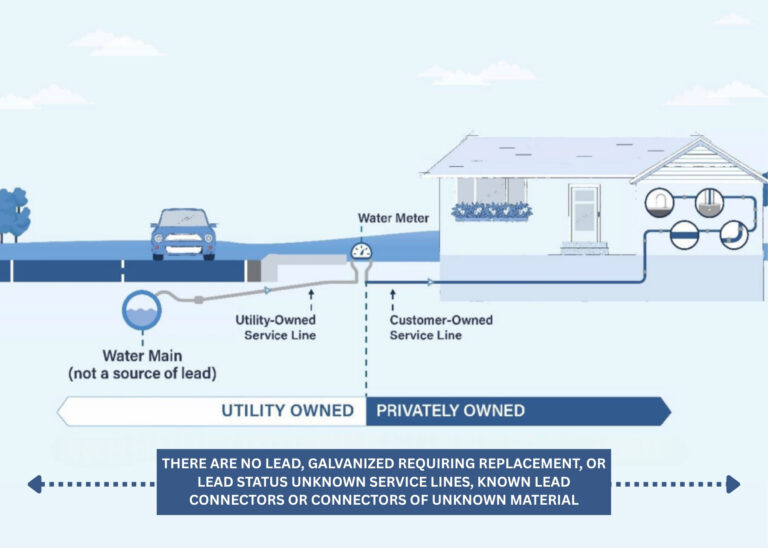
The Douglasville-Douglas County Water and Sewer Authority has compiled a service line inventory and found no lead service lines, galvanized requiring replacement, lead status unknown service lines, known lead connectors, or connectors of unknown material in our distribution system. You can view the Service Line Inventory here. If you want more information about your service line material and/or disagree with the service line material categorization in the inventory, please contact DDCWSA at 770-949-7617 or email at AskWSA@ddcwsa.com.
Testing Lead in Your Water
Since you cannot see, taste, or smell lead dissolved in water, testing is the only sure way of determining whether there are harmful quantities of lead in your drinking water. DDCWSA is providing free lead testing to all schools and daycares in our distribution system. We can also help with any follow-up testing and can provide you with a list of certified laboratories that can conduct lead testing. If any elevated lead levels are found in the drinking water from schools and childcare facilities, the sources can include old water fixtures, faucets, and interior plumbing.
To identify the material of customer-owned service line or interior plumbing, please visit www.epa.gov/protectyourtap for instructions.
What if my private service line is lead or galvanized requiring replacement?
There are opportunities available to replace lead and galvanized requiring replacement service lines and programs that provide financing solutions to assist property owners with replacement of their portion of a lead or galvanized requiring replacement service line. For more information, contact DDCWSA at 770-949- 7617 or email AskWSA@ddcwsa.com.
We’ve provided a few resources to help you learn more about lead, how it can get into drinking water, and simple steps you can take to reduce potential exposure in your home or building. For additional information about reducing lead exposure around your home or building and the health effects of lead, visit EPA’s website at www.epa.gov/lead or contact your health provider.